Introduction
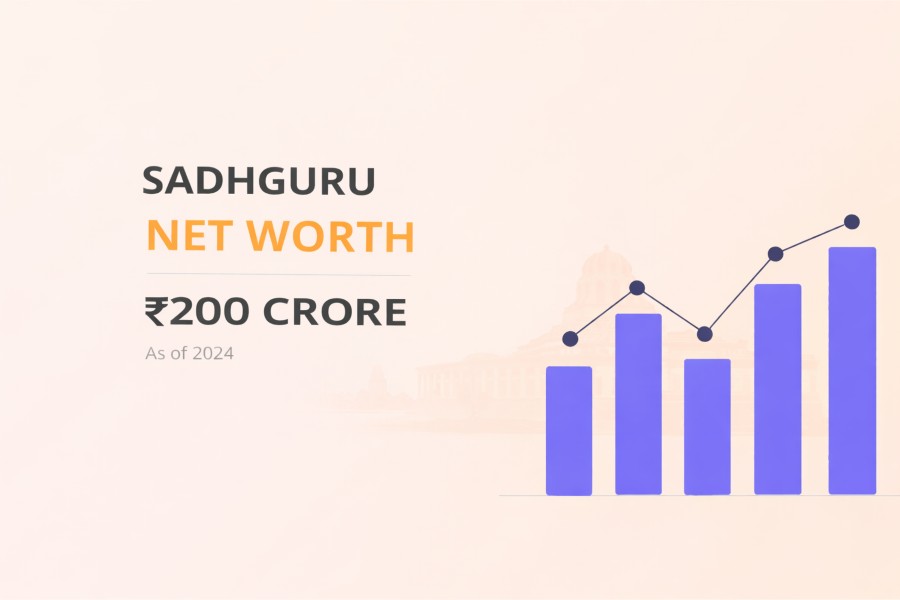
Sadhguru Jaggi Vasudev is a paradox in the world of wealth and spirituality. In an era where "Godmen" are often associated with accumulating vast personal empires, luxury cars, and gold ornaments, Sadhguru stands out with his saffron robes, flowing beard, and a fleet of motorcycles. He is the founder of the Isha Foundation, a non-profit organization that operates on a scale comparable to multinational corporations. Yet, he famously claims to own nothing personally. This dichotomy makes the question of Sadhguru's net worth complex and fascinating. Is he a penniless monk, or the CEO of a multi-million dollar spiritual conglomerate?
This analysis aims to demystify the financial anatomy of Sadhguru. We must look beyond the traditional definition of "net worth"—sum of assets minus liabilities—and apply a more holistic lens suitable for a spiritual leader. We will examine the massive asset base of the Isha Foundation, the revenue generated by yoga programs, the economic value of his ecological projects, and his personal lifestyle. By dissecting these layers, we reveal a man who possesses minimal personal wealth but controls a massive engine of social capital and economic activity. The true measure of his financial status lies not in his bank account, which he claims is effectively zero, but in the billions of dollars worth of infrastructure and social impact managed under his guidance.
The Philosophy of Zero: Personal Possession vs. Organizational Control
The Monk with a Motorcycle
To understand Sadhguru's net worth, one must first accept his fundamental philosophy: non-attachment to material possessions. Sadhguru has stated unequivocally in numerous interviews that he does not own a house, a car, or significant bank balances. He famously travels across the world on his motorcycle, often sleeping in ashram guest rooms or even on the floor during journeys. His personal attire is simple, and he does not wear jewelry or luxury watches.
However, this lack of personal ownership does not equate to a lack of access or control. He lives a life of privilege funded by the organization he leads. The distinction is crucial: *Net Worth* typically implies personal ownership. By that strict definition, Sadhguru's net worth is negligible. However, if we consider "Net Worth" as the capacity to generate resources and command infrastructure, his valuation is immense. He effectively functions as the steward of a billion-dollar enterprise without holding equity in it. This model allows him to maintain the moral high ground of a renunciant while wielding the economic power of a tycoon.
The Isha Foundation Asset Base
The Isha Foundation, headquartered in Coimbatore, Tamil Nadu, is the physical manifestation of Sadhguru's vision. It is not merely an ashram; it is a self-sustaining township spread over 150 acres. The infrastructure includes the massive Adiyogi statue, the Dhyanalinga yogic temple, residential complexes for thousands of volunteers, dining halls that serve millions of meals annually, and state-of-the-art medical centers.
Estimating the real estate value of the Isha Ashram alone is difficult, but given its size and location in the foothills of the Velliangiri Mountains, the land and construction value would easily run into hundreds of crores. Add to this the Isha Institute of Inner Sciences in the USA (Tennessee), centers in Lebanon, Canada, and Malaysia, and the asset base becomes a global portfolio. While Sadhguru does not own these assets, the revenue they generate and the operational budgets they command are under his sole direction. In the world of non-profits, this level of asset concentration is rare and speaks volumes about the financial viability of his spiritual brand.
-
Isha Yoga Programs Core Revenue
The primary engine of the organization's economy is the yoga programs. "Inner Engineering," the flagship introductory program, is conducted globally in stadiums and online. With millions of graduates, the fees from these programs form a massive revenue stream. Advanced programs and retreats (like Bhava Spandana) command premium pricing. This steady influx of fees funds the maintenance of the ashram and the free outreach programs.
-
The Adiyogi Statue Tourism & Brand
The 112-foot tall statue of Adiyogi (Shiva) at the Isha Yoga Center is not just a spiritual symbol but a tourism magnet. Recognized by the Guinness World Records as the "Largest Bust Sculpture," it attracts lakhs of visitors annually. The traffic generated boosts the local economy and drives donations. It serves as a perpetual marketing tool, cementing the Isha brand in the global consciousness and ensuring a constant stream of new visitors and potential program participants.
-
Ecological Projects (Cauvery Calling) Funding Power
Sadhguru's "Rally for Rivers" and "Cauvery Calling" campaigns are ambitious ecological projects aimed at revitalizing India's rivers. These campaigns have successfully raised hundreds of crores in public and corporate donations. This ability to mobilize massive funds for social causes demonstrates a financial influence that rivals the largest NGOs in the world. It proves that his "net worth" in terms of social trust and fundraising capability is extraordinary.
The Spiritual Economy: Monetizing Ancient Wisdom
Corporate Consulting and Leadership Programs
One of the most unique aspects of Sadhguru's financial model is his penetration into the corporate world. He is a frequent speaker at the World Economic Forum (WEF) in Davos, headquarters of major tech giants like Google and Microsoft, and top business schools like IIM Ahmedabad and ISB. He does not charge for these speaking engagements in the traditional celebrity sense, but the exposure serves as a massive marketing funnel for Isha's paid programs.
Furthermore, Isha offers specific leadership and well-being programs tailored for corporations. These B2B deals bring in substantial revenue. By packaging yoga and meditation as tools for productivity and stress management, Sadhguru has commodified spirituality in a way that is palatable and attractive to the capitalist class. This "B2B Spirituality" is a key driver of the organization's robust financial health.
Merchandise, Media, and Publishing
The Isha Foundation runs a successful e-commerce store selling a variety of products: "Isha Life" Ayurvedic medicines, organic food products, clothing, and spiritual accessories. This retail arm adds a significant layer to the revenue.
Sadhguru is also a prolific author and New York Times bestselling author. Books like *Inner Engineering: A Yogi's Guide to Joy* and *Death: An Inside Story* sell millions of copies globally. While book royalties are modest compared to yoga programs, they enhance the brand. Additionally, his YouTube channel boasts millions of subscribers and billions of views. While he claims not to monetize YouTube directly to keep the message accessible, the platform drives traffic to the paid courses and donation pages, creating a funnel effect that is digitally native and highly efficient.
Lifestyle, Assets, and Controversies
A Life of Disowned Luxury
Sadhguru's lifestyle is a study in calculated simplicity. He owns no property. His famous possessions include a collection of high-end motorcycles (which he often rides himself) and a few personal effects. These motorcycles are often gifted or maintained by the foundation. He wears a Rolex or an Omega occasionally, which are often gifts from devotees. He lives in a modest room within the ashram, despite having the authority to reside in the most lavish quarters.
This lifestyle choice is strategic. It insulates him from accusations of corruption that often plague other gurus. By living like a monk, he maintains the moral authority to ask for donations. If he were to live in a villa, the flow of funds might dry up. His "zero possession" status is his most valuable asset in the economy of trust.
Controversies and Financial Scrutiny
Despite his clean image, Sadhguru and the Isha Foundation have faced scrutiny. Environmentalists have raised concerns about the construction activities in the ecologically sensitive Western Ghats, leading to court cases. Questions have been raised about the financial transparency of the foundation, as non-profits in India are not required to disclose detailed balance sheets to the public in the same way public companies are.
However, unlike the Indian political class, Isha Foundation has generally maintained a clean audit record with no major financial scams proven against it. The controversies usually revolve around land use and environmental clearances rather than embezzlement or personal accumulation. This relative financial integrity is a major factor in the continued growth of his organizational net worth.
Comparative Analysis: The Guru Economy
How does Sadhguru's financial empire compare to his peers?
| Spiritual Leader | Organization Type | Primary Revenue Stream | Personal Wealth Style |
|---|---|---|---|
| Sadhguru | Non-Profit (Isha Foundation) | Yoga Programs, Donations | Renunciant (Zero Ownership) |
| Baba Ramdev | For-Profit (Patanjali Ayurveda) | FMCG Sales, Medicine | Ascetic (Leans on Trust) |
| Sri Sri Ravi Shankar | Non-Profit (Art of Living) | Courses, Donations | Renunciant |
| Mata Amritanandamayi | Non-Profit (M.A. Math) | Donations, Charitable Hospitals | Renunciant |
The most striking comparison is with Baba Ramdev. While both are yoga gurus, Ramdev built a for-profit FMCG empire (Patanjali) that generates turnover of thousands of crores, making him a key player in the Indian economy. Sadhguru, conversely, has kept Isha strictly non-profit. This limits his personal net potential but increases his social capital. Ramdev sells soap and noodles; Sadhguru sells "well-being" and "ecology." Sadhguru's model is arguably more sustainable in the long run because it relies on the voluntary contribution of devotees rather than market competition, though it lacks the explosive growth potential of a consumer goods company.
The Global Reach and Future Valuation
Sadhguru is arguably India's most successful spiritual export. While others have a strong diaspora following, Sadhguru has mainstreamed yoga in the West in a way that few others have. His ability to articulate complex Indian spiritual concepts in simple, logical English has made him a darling of the Western media and Silicon Valley.
This global reach is the biggest driver of his future valuation. As the West grapples with mental health crises, the demand for Isha's programs is rising. The Isha Institute of Inner Sciences in the USA is expanding, meaning dollar-denominated revenue is flowing into the Indian parent organization. This currency diversification strengthens the financial backbone of his empire. Furthermore, his advocacy for policy changes in soil health and environment positions him to potentially tap into global climate funds and government grants, opening up entirely new revenue streams that are not dependent on individual donations.
Conclusion: Wealth Beyond Measure
When we analyze Sadhguru's net worth, we find that the balance sheet is split. On one side is his personal sheet: empty of assets, rich only in experience. On the other side is the organizational sheet: the Isha Foundation, teeming with land, infrastructure, cash flow, and human capital.
He has effectively inverted the traditional model of wealth. Instead of accumulating, he has distributed. Instead of owning, he has facilitated. His financial success lies not in what he keeps, but in what he circulates. He has built a self-sustaining ecosystem that generates billions in economic activity, yet he remains detached from it. This is the ultimate paradox of the "Mystic Millionaire." His net worth cannot be counted in Rupees or Dollars; it must be counted in the millions of lives touched, the millions of trees planted, and the global shift in consciousness he inspires. However, if one were to put a price tag on the entity he controls, it is undoubtedly in the range of hundreds of millions of dollars, making him one of the most powerful "non-owners" in the world.
Frequently Asked Questions
Officially, Sadhguru claims to own nothing. He does not own a house, car, or significant personal bank balance. He functions as a monk who has renounced personal possessions. His lifestyle is supported by the Isha Foundation, but he does not draw a traditional salary or own shares in the organization.
The Isha Foundation generates revenue primarily through fees for yoga programs (like Inner Engineering), donations from devotees, sales of merchandise (Isha Life), and grants for ecological projects (Cauvery Calling). They operate as a non-profit, meaning surplus revenue is reinvested into the organization's activities.
In terms of personal wealth, neither is "rich" in the traditional sense as they are renunciants. However, the business empire linked to Baba Ramdev (Patanjali Ayurveda) has a much higher turnover and market valuation than the Isha Foundation. Ramdev is associated with a for-profit conglomerate, whereas Sadhguru heads a non-profit trust.
The Isha Foundation is a non-profit trust. Legally, trusts do not have "owners." They are managed by a board of trustees. Sadhguru is the founder and the guiding light of the organization, but he does not "own" the assets. The assets are held in trust for the charitable purposes of the organization.
The exact cost of the 112-foot Adiyogi statue has not been publicly disclosed in detail, but such massive steel structures typically cost tens of crores to construct. However, its value to the organization as a branding and tourism asset is incalculable, driving millions of visitors to the ashram.
Final Financial Overview
Sadhguru represents a new paradigm of wealth: Spiritual Capital. He has proven that one can operate a massive, global-scale operation without personal greed. His "net worth" is the Isha Foundation—a well-oiled machine dedicated to human well-being. While his personal bank balance may read zero, his influence over the global economy of spirituality is absolute. He is a billionaire of the soul, and in his case, that currency seems to be the only one that matters.