Introduction
Harsh Jain is the trailblazer who transformed the Indian sports industry. As the co-founder and CEO of Dream Sports, the parent company of Dream11, he pioneered the fantasy sports revolution in a country that eats, sleeps, and breathes cricket. Before Dream11, sports consumption in India was largely passive—watching a match on TV or listening to commentary on the radio. Harsh Jain introduced the concept of "active engagement," allowing millions of fans to become team selectors, strategists, and winners, all from their smartphones.
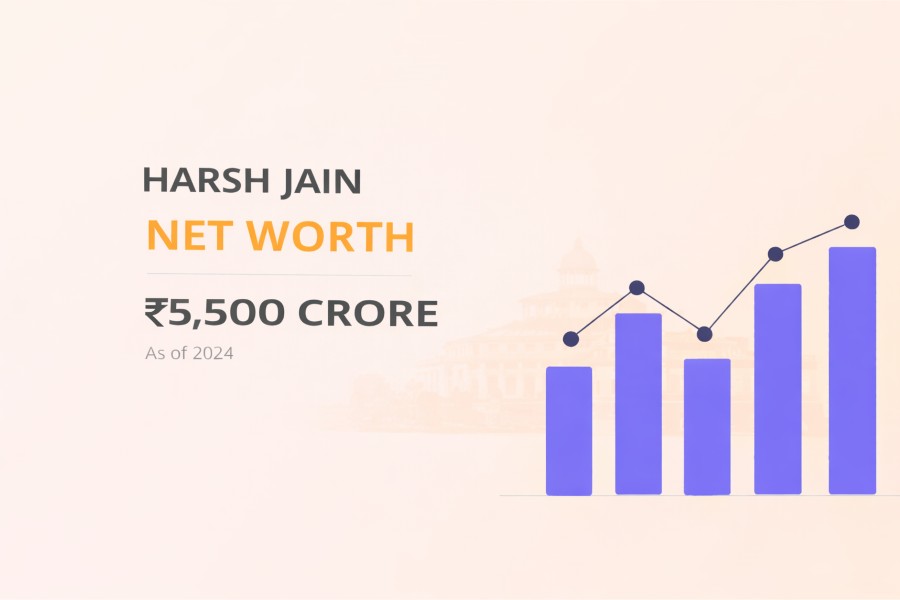
His entrepreneurial journey is a masterclass in identifying a blue ocean market and executing it with precision. From bootstrapping a startup in 2008 to taking Dream Sports public in 2021—making it the first Indian gaming unicorn to list on the stock exchanges—Jain has minted a massive fortune. Today, Harsh Jain's net worth is estimated to be in the range of $1.5 Billion to $2 Billion, firmly placing him among the youngest and most influential billionaires in India. This comprehensive analysis delves into the financial anatomy of Harsh Jain, exploring the valuation of Dream Sports, the strategic acquisition of the IPL rights, the creation of the FanCode ecosystem, and his ownership of the Punjab Kings IPL team.
The Genesis of a Game Changer
The 2008 Vision: Betting on Skill
Harsh Jain's story begins not in a corporate boardroom, but in the stands of a cricket stadium. An engineering graduate from the University of Pennsylvania and an MBA from Columbia Business School, he had a lucrative career lined up in the United States. However, his passion for cricket and his fascination with the English Premier League (EPL) fantasy leagues sparked an idea that would change his life.
In 2008, along with his childhood friend Bhavin Pandey, he co-founded Dream11. The premise was simple yet revolutionary for India: Create a platform where sports fans could pick their favorite players to form a virtual team and earn points based on the players' real-life performance. Crucially, Jain positioned this as a "game of skill" rather than "gambling," a legal distinction that was vital for survival in the conservative Indian regulatory environment.
The early years were tough. The concept was alien to Indian users. Mobile internet was in its infancy (2G era). Jain and his team had to educate the market. They funded the company through personal savings and angel investments. There was no venture capital frenzy in India at the time. Harsh Jain's net worth in these early days was effectively negative, as he poured his savings into a dream that many ridiculed. However, his persistence paid off. As smartphones became ubiquitous and 3G/4G data became affordable, the user base exploded.
The IPL Partnership: The Tipping Point
The turning point for Dream11, and consequently for Harsh Jain's wealth, was the partnership with the Indian Premier League (IPL) in 2012. Before this, Dream11 operated largely on the fringes of cricket fandom. By becoming the official fantasy partner of the IPL, Dream11 gained instant credibility and massive visibility. The IPL was exploding in popularity, and Dream11 rode that wave.
Jain's strategy was aggressive. He spent heavily on marketing, featuring cricketing legends like MS Dhoni and Rohit Sharma in advertisements. He capitalized on the emotional connection Indians have with the IPL. This partnership converted casual cricket viewers into active Dream11 users. The user base grew from millions to tens of millions, setting the stage for the company's eventual dominance.
The Dream Sports IPO: Unlocking Value
The 2021 Listing
In August 2021, Dream Sports (Dream11's parent company) went public with a bumper IPO. It was the largest Indian tech IPO at the time, raising over ₹8,000 Crore. The listing was highly anticipated and successful, valuing the company at nearly $8 Billion on the opening day. This event was the primary catalyst for Harsh Jain's entry into the billionaire club.
Jain holds a significant stake in Dream Sports (alongside co-founder Bhavin Pandey and early investors like Tencent and Steadview Capital). While the exact percentage fluctuates with secondary market sales, the value of his equity is the cornerstone of his net worth. The IPO transformed his paper wealth into a liquid, market-determined valuation. It provided the capital for the company to expand aggressively into new verticals like Fancode and real money gaming.
-
Dream11 (Core Asset) Cash Cow
Dream11 remains the flagship product and the primary revenue generator. With over 130 million users, it commands a dominant market share in the Indian fantasy sports sector. The revenue from contest fees, which takes a percentage of the entry fees paid by users, runs into thousands of crores annually. This consistent, high-margin cash flow is the engine driving Harsh Jain's valuation.
-
FanCode (Media Rights) Strategic Asset
Harsh Jain recognized that to build a true sports conglomerate, he needed to own the content, not just the fantasy game. He launched FanCode, a multi-sport aggregator platform. FanCode has acquired digital streaming rights for various leagues (ISL, NBA, La Liga, etc.). While currently a high-burn investment, FanCode positions Dream Sports as a media powerhouse, adding a layer of vertical integration to Jain's portfolio that enhances the overall ecosystem value.
-
Real Money Gaming (Drem11 / DreamX) Growth Engine
Expanding beyond fantasy sports, the company has ventured into "Real Money Gaming" (RMG) with skill-based rummy and poker platforms. This sector has even higher monetization rates than free-to-play fantasy sports. Although this segment faces regulatory scrutiny, it represents a massive revenue multiplier for Jain, contributing significantly to the company's annual EBITDA.
-
Punjab Kings (IPL Franchise) Trophy Asset
In 2021, Harsh Jain and Dream Sports acquired the Mohali-based IPL franchise, Punjab Kings (formerly Kings XI Punjab), for a whopping sum of over ₹700 Crore. While an IPL team is an expensive asset to maintain (operating costs, player auctions), it provides unparalleled brand visibility and a direct link to the sport that drives the core business. It ensures Dream11's presence is visible in the physical world, not just on screens.
Comparative Analysis: The Gaming Mogul vs. Tech Titans
How does Harsh Jain’s financial standing compare to other leaders in the Indian digital economy?
| Tycoon | Primary Sector | Primary Business Model | Net Worth Trajectory |
|---|---|---|---|
| Harsh Jain | Sports Tech & Gaming | Freemium + Contests | High Growth (Post-IPO) |
| Vijay Shekhar Sharma | Fintech (Paytm) | Payments & Commerce | Volatile (Post-IPO Correction) |
| Sachin Bansal | E-Commerce (Flipkart/Navi) | Marketplace & Lending | Stable (Matured Asset) |
| Byju Raveendran | EdTech | Subscription & Courses | Declining (Valuation Adjustments) |
Harsh Jain occupies a unique sweet spot. Unlike Vijay Shekhar Sharma of Paytm or Byju Raveendran, whose companies have faced severe market corrections and valuation cuts post-IPO, Dream Sports has remained relatively resilient. While the stock price has fluctuated, the core business of Dream11 is robust and cash-positive. Jain’s net worth has held up better than many of his "New Age Tech" contemporaries because his business model—micro-transactions from millions of users—generates steady cash flow. He doesn't rely on heavy capital expenditure in the same way deep-tech or hardware companies do. He is the "Cash King" of the Indian internet economy.
The Philosophy of "Sportsainment"
More Than a Game
Harsh Jain often describes Dream11 as "Sportsainment"—the intersection of sports and entertainment. This philosophy drives his business decisions. He realized early on that to scale, he couldn't just be a gaming company; he had to become a media company. This is why the acquisition of the Punjab Kings was strategic. It wasn't about buying a cricket team for vanity; it was about buying a "content property" that would draw users into the Dream11 ecosystem.
This philosophy extends to his philanthropic arm, the Dream Sports Foundation (DSF). Launched in 2019, DSF uses sports to promote education and inclusion among underprivileged children. While this is a philanthropic endeavor, it also builds a massive reservoir of goodwill and brand love, which indirectly contributes to the valuation of the parent company. In the world of business, brand love is a tangible asset.
Regulatory Hurdles and Legal Battles
The GST and GST Council Show Cause Notice
No analysis of Harsh Jain's net worth would be complete without addressing the regulatory risks. In late 2021, the GST Intelligence Directorate issued a show-cause notice to Dream11, demanding a staggering ₹8,000 Crore in taxes. The department argued that the platform fees should be taxed at 28% (GST on betting/gambling) rather than 18% (GST on skill games).
This was a potential "nuclear bomb" for the company's valuation. A tax liability of that magnitude could wipe out profits and decimate the stock price. Harsh Jain and Dream Sports contested this vigorously, arguing that fantasy sports are games of skill protected under the Indian Constitution. The matter is currently sub-judice. The outcome of this legal battle is a massive overhang on Jain's wealth. If the courts rule against Dream11, the company will face a significant financial hit, and Jain's net worth will drop. Conversely, a favorable verdict would clear the clouds and likely send the stock price soaring.
Personal Wealth, Lifestyle, and Investments
The Billionaire Next Door
Despite his massive wealth, Harsh Jain maintains a relatively understated public profile compared to some Bollywood-backed entrepreneurs. He is a "techie" at heart, often spotted in casual hoodies and sneakers. His primary asset is his stake in Dream Sports. He also owns luxury properties in Mumbai and London.
He is also an active angel investor. Through his family office, he has invested in several other startups, including Bounce (bicycle sharing), Kult (media), and other tech ventures. These investments diversify his portfolio, ensuring that his net worth is not entirely dependent on the performance of a single stock. However, the overwhelming majority of his wealth remains tied to the success of Dream11.
Global Expansion and the Future
Beyond Cricket
Harsh Jain's vision is global. He has successfully launched Dream11 in the USA (Dream11 US) and is targeting markets like Canada, the UK, and Australia. He has also acquired US-based companies like "FanDuel" (in a reverse merger scenario, where FanDuel acquired Dream11's US operations, but they operate in partnership). This global footprint insulates his wealth from being too dependent on the Indian cricket season.
Furthermore, the launch of "Dream Set Go" (DSG) has added a new vertical—tourism and experiences. This diversification into the offline world of sports travel (holidays to watch matches at Wimbledon, the Olympics, etc.) opens up new revenue streams that are high-margin and experiential.
Conclusion: The Captain of the Industry
Harsh Jain's net worth is a reflection of the changing face of Indian consumption. He monetized the nation's obsession with cricket in a way that was respectful of local laws yet aggressive in execution. He built a platform that turned every match into a personal event for the user.
From a bootstrapped startup in 2008 to a multi-billion dollar public company in 2021, his journey is a case study in persistence and market timing. While challenges like the GST notice and regulatory scrutiny loom large, Jain has navigated choppy waters before. He has proven his ability to pivot and partner effectively (with Tencent, the IPL, and global leagues). As the gaming sector in India continues to expand with the rise of 5G and affordable smartphones, Harsh Jain is well-positioned to see his net worth grow exponentially. He is the undisputed captain of the Indian sports tech ship, and he is sailing into a future where every game played has the potential to add to his fortune.
Frequently Asked Questions
Harsh Jain's net worth is estimated to be approximately $1.5 Billion to $2 Billion USD (approx. ₹12,000 Crore to ₹16,000 Crore). The majority of this wealth is tied to his stake in Dream Sports, the parent company of Dream11.
He became a billionaire through the astronomical success of Dream11. The company grew from a niche fantasy sports platform to the dominant player in India, attracting massive investment from Tencent and KKR. The IPO of Dream Sports in 2021 crystallized this value, pushing his holding past the billion-dollar mark.
Yes, in 2021, Dream Sports, led by Harsh Jain, acquired the Punjab Kings IPL franchise for ₹709 Crore. This acquisition gave them a significant brand presence in the physical world of cricket, complementing their digital platform.
The GST Intelligence Department issued a notice demanding ₹8,000 Crore, claiming Dream11 should pay 28% GST (gambling rate) rather than 18% (skill game rate). Dream11 and Harsh Jain dispute this, maintaining that fantasy sports are a game of skill. The case is currently pending in courts.
Harsh Jain and Bhavin Pandey, being co-founders, have comparable net worths. While Harsh is often cited with a slightly higher valuation due to his role as CEO and public face, the difference is marginal as they hold significant stakes in the same parent company. Both are billionaires.
Final Financial Overview
Harsh Jain is the architect of a new industry in India. He identified a deep passion point—sports—and built a technology platform around it. His net worth is a testament to the power of "Sportsainment" and the digital-first behavior of the modern Indian consumer. Despite the regulatory headwinds, his financial empire stands strong, backed by a loyal user base and a global vision that extends far beyond cricket.