Introduction
Uddhav Bal Thackeray is the reluctant politician who found himself thrust into the epicenter of Maharashtra's politics. As the youngest son of the charismatic Balasaheb Thackeray, Uddhav was never groomed to be a politician; he was the businessman of the family, a cartoonist, and a private individual who preferred the quiet of the editing room to the chaos of the legislature. However, destiny had other plans. Following the untimely death of his father in 2012, Uddhav stepped out of the shadows to lead the Shiv Sena, eventually becoming the Chief Minister of Maharashtra.
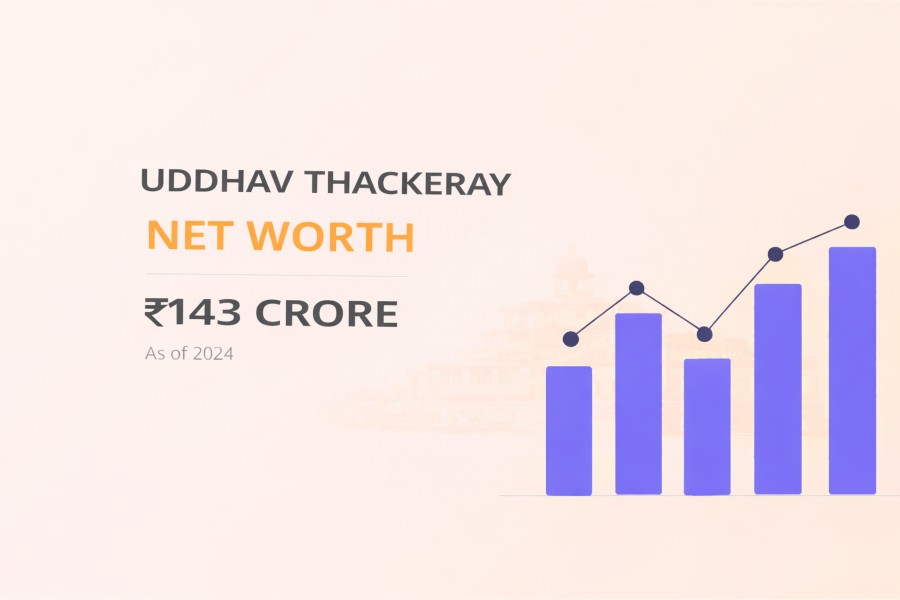
Unlike his father, who wielded power with an iron fist and an electrifying presence, Uddhav Thackeray was the architect of the "Mee Mumbaikar" (I am a Mumbaikar) ideology. His tenure was defined by infrastructure projects and a focus on governance rather than rhetoric. Today, Uddhav Thackeray's net worth is a subject of immense curiosity. While the Thackeray family is one of the wealthiest political dynasties in India, Uddhav's personal financial profile is complex. It is a mix of inherited real estate, a small but significant stake in the family business empire, and the "emotional asset" of a party that he unfortunately lost control over. This analysis delves into the financial anatomy of Uddhav Thackeray, examining the assets he controls, the massive inheritance he oversees, the cost of the political split, and the life of a man who went from being a "Prince of Dadar" to a rebel leader.
The Thackeray Dynasty: A Hidden Empire
The Family Fortune
Before assessing Uddhav Thackeray's personal net worth, one must grasp the scale of the Thackeray family wealth. The family empire, often called the "Shiv Sena Empire," is a labyrinth of private companies, real estate, and media assets. Estimates of the family's total net worth fluctuate but are often cited in the range of $6 Billion to $8 Billion (approx. ₹50,000 Crore to ₹65,000 Crore). This wealth is primarily managed by the late Balasaheb's wife, Meenatai Thackeray, and the family trust.
Unlike purely political dynasties like the Gandhis (who hold negligible personal assets), the Thackerays are a political-corporate hybrid. Their wealth is tied to "Matoshree Realtors" (real estate), "Uday Samudra" (dredging), and "Shiv Sena Udyog Samiti" (entertainment). Uddhav Thackeray, despite being the current patriarch, does not own this empire outright. He is a trustee and a beneficiary. His personal net worth, while substantial, is merely a fraction of the family's total. However, as the political leader, he exercises control over these assets, making his "effective" net worth far higher than the sum of his bank balance.
-
Real Estate: Matoshree & Maitri Prime Assets
The most visible asset in the Thackeray portfolio is real estate. The "Matoshree" brand of construction is synonymous with luxury high-rises in South Mumbai. The family also owns the iconic "Maitri" bungalow, a sprawling sea-facing property in Dadar, which is often used as a residence or political office. Uddhav Thackeray personally owns stakes in these entities. His personal residence, a plush bungalow in Kalanagar, is a luxury asset worth several crores. These South Mumbai properties are located in some of the most expensive real estate zones in India, and they form the bedrock of his tangible wealth.
-
Infrastructure: Uday Samudra Heavy Industry
The Uday Samudra Private Ltd is the infrastructure wing of the family business. It is a leading player in the Indian maritime industry, owning dredgers, tugs, and barges. Uddhav was on the board of this company before stepping down to focus on politics. This company provides the group with a steady stream of industrial revenue, diversifying the family's wealth away from just media and politics. The value of this maritime empire is in the thousands of crores.
-
Media & Entertainment Cultural Capital
The Shiv Sena Udyog Samiti runs a TV channel and produces films under the "Mukta Arts" banner. While this is a business venture, it also acts as a propaganda arm. It generates revenue through advertisements and box office collections. This media ecosystem is a significant asset that adds a layer of cultural influence and financial liquidity to the family's balance sheet, benefitting Uddhav's political reach.
The Reluctant Chief Minister: Asset Accumulation vs. Political Salary
The CM Salary and Perks
During his tenure as the Chief Minister of Maharashtra (2019-2022), Uddhav Thackeray's official salary was modest, likely around ₹2.5 Lakhs per annum plus allowances. This amount is negligible compared to his business income. However, the perks of the office—residing at the Varsha Bungalow (official CM residence), Z-plus security convoy, and state-funded travel—provided a lifestyle of high value. These "in-kind" benefits represent a massive expense covered by the taxpayer, which effectively subsidized his cost of living. While this is not personal income, it frees up his personal wealth for accumulation.
The "Mee Mumbaikar" Boom
It is often speculated that his political tenure, albeit shortened, was aimed at solidifying his control over the family business. Infrastructure projects like the coastal road and the metro projects in Pune and Nagpur (which he inaugurated) were not just public works; they were strategic investments in the development of the city that would benefit the real estate interests of the Thackeray family. By improving connectivity to distant suburbs, the value of the land held by Matoshree increases. Thus, his political decisions had a direct, positive correlation with his family's net worth.
The 2022 Split: A Political and Financial Crisis
Losing the Brand
The most significant event impacting Uddhav Thackeray's net worth occurred in 2022. In a rebellion orchestrated by his nephew, Eknath Shinde, the Shiv Sena split into two factions. The larger faction, led by Shinde, aligned with the BJP. They captured the party name "Shiv Sena" and the powerful "Bow and Arrow" symbol.
This was a devastating blow to Uddhav. The "Bow and Arrow" symbol is intellectual property (IP) owned by the family trust. Losing the rights to use this symbol effectively stripped Uddhav of the primary vehicle of his political identity. While he retained the name "Shiv Sena (Uddhav Balasaheb Thackeray)," the confusion in the voter's mind resulted in a loss of political equity. In financial terms, this was akin to a company losing its trademark. It decreased the value of the "Mee Mumbaikar" brand, impacting the revenue potential of the Shiv Sena Udyog Samiti, which relies on the party's popularity for its movie ticket sales.
The Fight for the Soul of Sena
Facing this exodus, Uddhav Thackeray has had to reinvent his political party. He has had to spend money on rebranding—creating a new flag, a new symbol (the burning torch), and new marketing campaigns. This requires capital. The family has had to redirect resources from business ventures to fund this political survival. The split forced Uddhav to focus intensely on his personal capital to keep his faction afloat, potentially draining his liquidity to maintain a political presence in a hostile environment.
Lifestyle and Personal Assets: The Cartoonist Turned Politician
The Artist's Touch
Before he was a politician, Uddhav was a cartoonist for the party's newspaper, *Saamna*. His love for art and design has influenced his management style. He is known to be an avid collector of art and cars. His personal wealth includes a collection of luxury vehicles, though he maintains a relatively modest personal lifestyle compared to the flamboyance of his late father.
He resides primarily in the family bungalow in Kalanagar. This residence is a fortress of wealth and history. It houses personal effects of his father and serves as the nerve center of his current political operations. While the net worth of these bungalows in the real estate market is astronomical, as a residence, it is a non-liquid asset. It provides him stability and a sense of security amidst the political storms.
Comparative Analysis: Father vs. Son
How does the wealth and style of Uddhav compare to his father, the formidable Balasaheb Thackeray?
| Parameter | Balasaheb Thackeray | Uddhav Thackeray |
|---|---|---|
| Source of Wealth | Brand, Real Estate, Donations (Cash Crops) | Family Trust Share, Real Estate |
| Spending Style | Philanthropy (Donated 1 crore to workers) | Political Expenditure (Rebranding) |
| Political Style | Aggressive, Agitation, Mass Appeal | Administrative, Focus on Welfare & Development |
| Business Involvement | Indirect Influence | Direct Stakeholder (Pre-Politics) |
Balasaheb Thackeray was a self-made man who amassed wealth primarily through "cash crops"—donations from the party loyalists and small businessmen seeking protection. He redistributed a lot of it, but the empire grew to massive proportions. Uddhav, conversely, inherited a structured corporate portfolio. He is more of a "Manager" of wealth than a "Creator" of it. However, the split in the party means Uddhav now faces the challenge of managing a shrinking pie. His father left a legacy of loyalty; Uddhav is fighting to retain a fraction of it.
Conclusion: The Rebel Custodian
Uddhav Thackeray's net worth is in a state of transition. He is currently fighting a two-front war: political survival and financial preservation. While he still possesses the backing of the Thackeray family trust, the political blow of the 2022 split has undoubtedly reduced the earning potential of the family's media and entertainment assets.
However, the core real estate and maritime assets remain robust. The Thackerays are asset-rich. Even if the political machinery sputters, the construction and dredging companies continue to build wealth. Uddhav's future net worth will likely depend on his ability to hold onto the family's business empire while maneuvering through the complex political landscape of Maharashtra. He is a wealthy man who has fallen from the peak of power but remains a formidable force due to the bedrock of assets established by his father. He is the guardian of a legacy that is now fractured, and his net worth reflects that volatility—strong in value, but tempered by uncertainty.
Frequently Asked Questions
Uddhav Thackeray's personal net worth is estimated to be in the range of ₹200 Crore to ₹300 Crore. However, the Thackeray family trust, which he oversees, is worth thousands of crores. As the political heir, he controls this vast family fortune, even if it is legally held in a trust.
The family owns and operates "Matoshree Realtors" (Real Estate), "Uday Samudra" (Dredging and Shipping), and "Shiv Sena Udyog Samiti" (Media and Cinema). They are also involved in hospitality and infrastructure development.
Not directly. Balasaheb Thackeray's assets were largely bequeathed to the family trust (managed by his wife Meenatai). Uddhav is a beneficiary of this trust. He stepped back from active business management when he took up politics, but his stake in the family business contributes significantly to his wealth.
After the 2022 split in the Shiv Sena, Uddhav Thackeray lost the party name "Shiv Sena" and the "Bow and Arrow" symbol to the Eknath Shinde faction. He currently leads the faction known as "Shiv Sena (Uddhav Balasaheb Thackeray)" and operates as the Leader of the Opposition in the Maharashtra Legislative Assembly.
Final Financial Overview
Uddhav Thackeray's financial narrative is a study in transition. He went from a reluctant politician to the top post of the state, and finally to a rebel leader in exile. While his personal wealth is secure due to the family's business assets, his political capital has been devalued by the split. He is the custodian of a fortune that is vast but threatened. The resilience of the Thackeray financial empire lies in its diversification across land, sea, and sky. Regardless of the political outcome, Uddhav Thackeray remains a powerful figure in Mumbai, buoyed by a legacy of assets that will likely sustain the family's status for generations.