Introduction
Harsh Mariwala is the "Lord of Spices," the man who transformed a regional spice company into a global culinary empire. As the Chairman and Managing Director of MDH (Mahashian Di Hatti), he is the quintessential third-generation entrepreneur who refused to let a legacy rest on its laurels. While his father and grandfather built a formidable business in North India, it was Harsh Mariwala who brought MDH to the world, branding it as the "Best in the World." His journey is a masterclass in modernizing tradition, leveraging marketing genius to turn ground turmeric into a billion-dollar brand.
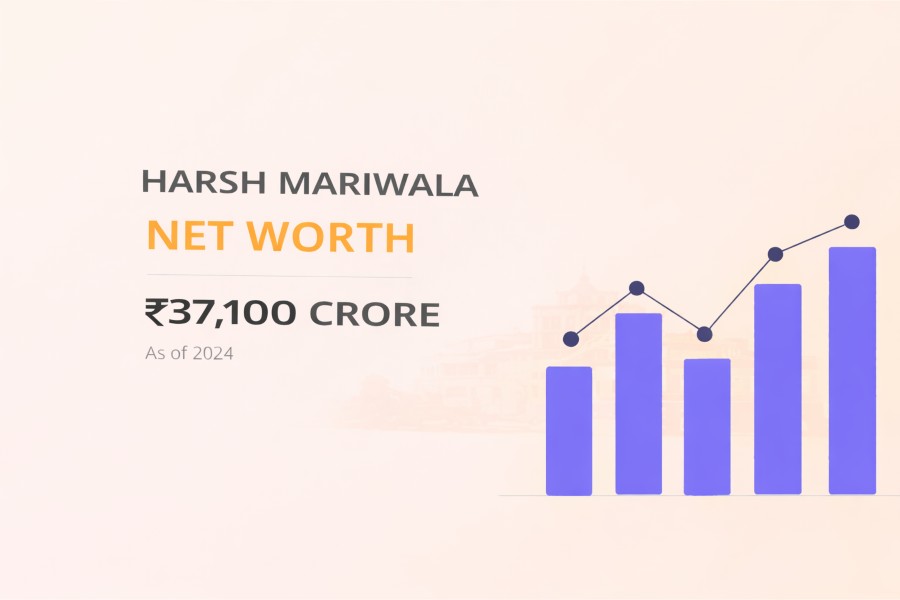
Today, Harsh Mariwala's net worth is estimated to be between $1.2 Billion and $1.6 Billion (approx. ₹10,000 Crore to ₹13,000 Crore). Unlike many of his contemporaries in the FMCG (Fast-Moving Consumer Goods) sector who rely on conglomerate backing, Mariwala has carved out his wealth through aggressive family ownership, strategic diversification into hospitality, and a relentless focus on brand equity. This comprehensive analysis delves into the financial architecture of Harsh Mariwala, examining the turnover of MDH, the secret sauce of his marketing strategy, the luxury of his hospitality ventures, and the "Spice Wars" that defined his rise to the top of the Indian pantry.
From 100 Crore to 10,000 Crore: The Mariwala Transformation
The Return of the Prodigal Son
In 2010, when Harsh Mariwala joined the family business full-time, Mahashian Di Hatti was a successful but largely regional player with an annual revenue of around ₹60 Crore to ₹100 Crore. The company had a legendary reputation in Delhi and North India, but it was losing ground to aggressive competitors like Catch Spices, which was rapidly capturing market share with modern packaging and heavy advertising.
Harsh Mariwala had studied abroad and worked in the financial sector in the UK, but the call of the family business brought him back. He didn't join as a junior manager; he joined as a catalyst. He understood that the world was moving from loose spices sold in bags to branded, packaged goods that could sit on global supermarket shelves. His first act was a massive overhaul of the company’s packaging. He shifted from dull, traditional packaging to vibrant, air-tight containers that preserved freshness and looked modern on the shelf. This simple visual change, combined with aggressive marketing, was the spark that ignited the company's explosion.
The Marketing Offensive
Harsh Mariwala’s wealth creation is directly tied to his marketing acumen. He broke the unwritten rule that Indian spice companies shouldn't spend big money on advertising. He went all out. MDH became a fixture on prime-time television and during major cricket events. The "Dadaji" (Grandfather) ad campaign, featuring the iconic mascot derived from his grandfather Dharampal Ji, was a masterstroke. It connected the brand's 100-year heritage with modern values of trust and purity.
He also leveraged the power of the Indian diaspora. By marketing MDH as the "No. 1 Spice Brand in India" to the Indian communities in the US and the UK, he created a demand pipeline that fueled his global expansion. This marketing-to-revenue conversion is the engine of his net worth. By spending aggressively to capture mindshare, he ensured that MDH products commanded premium pricing power, leading to margins that are the envy of the industry.
-
MDH (Mahashian Di Hatti) Core Asset
The primary driver of Harsh Mariwala's wealth is the MDH company itself. Under his leadership, the company's revenue has grown exponentially, crossing the ₹10,000 Crore mark. The company holds a dominant 38% market share in the branded spices segment in India. This market dominance creates a "moat" that protects pricing power and ensures consistent cash flow. As the Chairman, Harsh holds a significant majority stake in the unlisted company, meaning the profits and asset appreciation accrue almost entirely to the family.
-
Rhythm Group (Hospitality) Diversified Asset
Harsh Mariwala is not just a spice baron; he is a hospitality tycoon. Through the Rhythm Group, he owns and operates the "Royal Castle" chain of luxury hotels in Goa and a heritage property in Jaipur. But his most significant financial asset in this sector is his partnership with ITC (Indian Tobacco Corporation). He holds a minority stake in the iconic ITC Maurya hotel in Delhi and a strategic partnership with the chain. This asset class provides him exposure to the booming Indian travel and tourism sector, diversifying his risk beyond the cyclical nature of FMCG.
-
Global Expansion (Chungath) International Growth
To capture the massive Indian diaspora market in the West, Harsh Mariwala acquired "Chungath," a brand popular in Kerala and the Middle East. This acquisition gave him immediate access to distribution networks in the US, UK, and Canada. By integrating Chungath into his portfolio, he effectively put MDH products on the shelves of thousands of ethnic grocery stores globally. This international footprint adds a layer of currency diversification to his net worth, shielding it from domestic economic fluctuations.
-
Luxury Assets & Real Estate Personal Holdings
Harsh Mariwala's lifestyle reflects the opulence of his success. He is an avid car collector, owning a fleet of luxury vehicles including Rolls Royces, Bentleys, and Ferraris. He also owns prime real estate in Delhi and Mumbai. These tangible assets, while secondary to the business valuation, represent a significant store of wealth. They serve as both status symbols and investment assets that appreciate over time.
The Spice Wars: MDH vs. The World
The Battle with Catch Spices
No analysis of Harsh Mariwala’s net worth is complete without mentioning his rivalry with Catch Spices. In the early 2010s, Catch Spices, backed by private equity, was spending aggressively and eating into MDH's market share. The battle was fierce, with ad wars over "Asli Masala" (Real Spice). Harsh Mariwala met this challenge head-on. He doubled down on quality control, highlighting the problem of adulteration in the industry.
He launched campaigns emphasizing purity and the "No. 1" claim. This battle of attrition was expensive, but it had a definitive winner. By 2020-2021, MDH had regained its crown and was declared the number one brand in the branded masala segment. This victory was crucial for Mariwala's wealth; losing the top spot would have eroded the premium pricing power of MDH, shrinking margins and potentially stalling his net worth. The victory solidified the brand's premium status, ensuring that his net worth would continue to compound.
Managing Inflation and Commodities
The spice industry is sensitive to commodity price fluctuations. When the prices of raw materials like turmeric, cumin, and red chilli spike, profit margins get squeezed. Harsh Mariwala has managed this by securing long-term contracts with farmers and investing in backward integration. However, the volatility of the commodity market means that his net worth is not just about equity value; it is also about inventory value. A company like MDH holds massive amounts of raw spices in its warehouses. The value of this inventory is a moving target, often valued at hundreds of crores, acting as a hidden asset class on the balance sheet that contributes to the overall net worth.
The Hospitality Mogul: The Rhythm Group
Hotels and Real Estate
While spices bring in the volume, hospitality brings in the glamour. The Rhythm Group owns the "Royal Castle" hotels in Goa and the "Hill Fort" in Jaipur. These are not just businesses; they are high-value real estate assets located in prime tourist locations. The real estate value of these properties alone runs into hundreds of crores.
Furthermore, Mariwala is a partner in the Hotel ITC Maurya in Delhi. As an equity partner, he shares in the profits of one of India's most prestigious hotels. This strategic stake in a blue-chip hospitality asset provides a steady stream of passive income. It also connects him to the Tata Group (ITC's parent company) network, opening doors for future business collaborations. The Rhythm Group also manages catering for large events, providing high-margin B2B services that add to the group's bottom line.
Comparative Analysis: The Spice Barons of India
How does Harsh Mariwala stack up against other leaders in the food and spice sector?
| Tycoon | Company | Primary Focus | Market Cap/Valuation | ||
|---|---|---|---|---|---|
| Harsh Mariwala | MDH (Spices) | Branded Spices & Hospitality | ~$1.4 B (Est.) | ||
| Burman Family (Dabur) | Dabur India | Healthcare & Ayurveda | $10 B+ (Public) | ||
| Adi Godrej (Nature's Basket) | Godrej Agrovet | Food Retail (Food Baskets) | $10 B+ (Conglomerate) | ||
| Mohit Burman | Catch Spices | Branded Spices | $1 B (Est.) |
Harsh Mariwala sits in a unique category. While he is not as wealthy as the Burmans or the Godrejs (who head multi-billion dollar public conglomerates), he is the king of his specific niche. He has won the "Spice War" against Catch and Everest to become the undisputed market leader in branded spices. His net worth, derived entirely from a private family-owned business, is pure and undiluted by public market volatility. He doesn't have to answer to shareholders or analysts; he answers to the market. This independence allows him to take long-term bets, such as his US expansion, without worrying about quarterly results, contributing to the stability of his wealth.
Lifestyle, Assets, and the "Royal" Touch
The Garage of a Collector
Harsh Mariwala is known to be a connoisseur of fine automobiles. His garage is a testament to the success of MDH. It houses an enviable collection of luxury cars, including multiple Rolls-Royce Phantoms, Bentleys, and high-end sports cars like the Ferrari and Aston Martin. He is often seen driving these cars himself, showcasing his passion for engineering. Unlike many CEOs who use drivers, Mariwala enjoys the driving experience. The value of this car collection alone runs into several crores.
Real Estate in the Capital
Mariwala owns a palatial residence in Delhi, located in one of the city's most affluent areas. The house is a blend of traditional Indian aesthetics and modern luxury, reflecting the brand he represents. The property, along with other commercial real estate holdings in Delhi and Mumbai, adds a layer of tangible asset backing to his net worth. In the volatile world of commodities, having hard assets like premium real estate provides a financial safety net.
The Future: Global Dominance
The US Market Dream
The "Chungath" acquisition is the next frontier for Harsh Mariwala's wealth expansion. The United States represents the largest market for ethnic Indian groceries. By positioning MDH as the preferred brand for the Indian diaspora, Mariwala is tapping into a multi-billion dollar market outside India. This internationalization reduces his reliance on the domestic market and hedges his net worth against local economic slowdowns. If MDH becomes the go-to brand for curry powder and spices in the West, his net worth could see a steep upward trajectory, potentially doubling in the next decade.
The "Satyam, Shivam, Sundaram" Philosophy
Harsh Mariwala has successfully instilled the core values of the company—Purity, Quality, Integrity—into the very fabric of the brand. This philosophy is not just a tagline; it is a business strategy. In an era of food adulteration scandals, MDH's claim of purity resonates with the consumer, creating immense brand loyalty. This loyalty translates into pricing power. Consumers are willing to pay a premium for MDH products because they trust the brand. This trust is the most valuable asset Harsh Mariwala possesses, and it is the foundation upon which his multi-billion dollar net worth is built.
Conclusion: The Spice King
Harsh Mariwala's net worth is a testament to the power of branding and the enduring appeal of quality. He took a traditional family business and supercharged it with the adrenaline of modern marketing. He proved that a "masala" company can be run with the precision and aggression of a tech giant. By diversifying into hospitality and expanding globally, he has insulated his wealth and ensured that the name Mahashian Di Hatti is synonymous with quality across continents.
From a turnover of ₹100 Crore to an empire worth thousands of crores, Harsh Mariwala has scripted a success story that rivals any in the FMCG sector. He is the undisputed "Spice King," a title he earned not just through inheritance, but through a ruthless, quality-driven battle for the top spot. As he continues to expand his dominion in the US and beyond, the spice kingdom of Harsh Mariwala is only going to get richer, spicier, and more valuable.
Frequently Asked Questions
Harsh Mariwala's net worth is estimated to be around $1.4 Billion USD (approximately ₹10,000 Crore to ₹12,000 Crore). This valuation is derived from his 100% ownership of the private company MDH and his stakes in the Rhythm Group's hospitality assets.
He modernized MDH by changing the packaging, launching aggressive marketing campaigns (like the "Dadaji" ads), and emphasizing purity. He also diversified into the US market by acquiring the Chungath brand, capturing the Indian diaspora. His relentless focus on reclaiming the No. 1 market share from competitors like Catch Spices was crucial to his success.
No, MDH is a private limited company. It is not listed on the stock exchange. This means the entire company is owned by the Mariwala family, primarily Harsh Mariwala and his father Dharampal Mariwala. This allows them to make long-term strategic decisions without the pressure of quarterly results.
The Rhythm Group is the hospitality and hotel business owned by Harsh Mariwala. It includes the Royal Castle hotels in Goa and a partnership in the ITC Maurya hotel in Delhi. It represents his diversification beyond the spice business into the luxury travel and accommodation sector.
Yes, there was a fierce competition between MDH and Catch Spices in the mid-2010s. Both companies engaged in aggressive marketing and legal battles over the title of "No. 1." Harsh Mariwala won this battle, and today MDH holds a significantly larger market share than Catch.
Final Financial Overview
Harsh Mariwala stands tall as a titan of the Indian FMCG industry. He has proven that traditional sectors like spices can be as dynamic and profitable as technology if led with vision and aggression. His net worth is a reflection of his leadership, which transformed a family legacy into a modern corporate powerhouse. As the flavor of India spreads across the globe, the wealth of its primary purveyor is set to follow suit.