Introduction
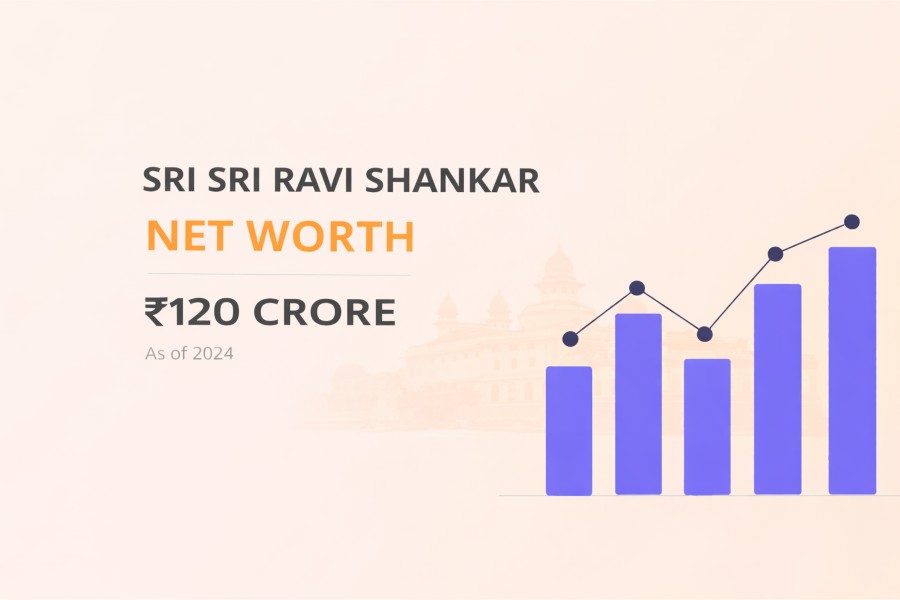
Sri Sri Ravi Shankar is a globally renowned spiritual leader and the founder of the Art of Living Foundation. Known for his message of peace, compassion, and a violence-free society, he has arguably built one of the most extensive non-profit networks in the world. With a presence in over 156 countries, his organization operates like a well-oiled multinational corporation, yet its core mission is humanitarian service. This duality raises an intriguing question regarding Sri Sri Ravi Shankar's net worth. How does one quantify the financial status of a man who advocates for detachment yet manages an empire that touches millions of lives?
Unlike business tycoons who measure wealth in stock options and real estate, Sri Sri Ravi Shankar’s financial profile is intertwined with the Art of Living Foundation. While he leads a life of personal simplicity, often wearing white robes and traveling with minimal personal luggage, the organization he commands generates significant revenue through courses, Ayurvedic products, and donations. This analysis delves deep into the economic structure of the Art of Living, exploring its revenue streams, asset valuation, and the "Guru Economy" that Sri Sri Ravi Shankar has mastered. We seek to understand if his net worth is merely a number, or a reflection of the immense social capital and infrastructural value he presides over.
The Art of Living Foundation: A Global Conglomerate
Infrastructure and Asset Valuation
The Art of Living is not just a spiritual movement; it is a massive infrastructural project. The international headquarters, located on the outskirts of Bangalore, is a sprawling campus known as the Ved Vignan Maha Vidya Peeth. This ashram spans hundreds of acres and includes residential complexes capable of housing thousands of people, meditation halls, a kitchen that serves meals to visitors daily, and administrative blocks.
Estimating the real estate value of this property in Bangalore's expanding periphery, combined with the equipment and facilities, would easily place the asset value in the multi-hundred-crore range. Beyond India, the foundation owns centers in prime locations in major global cities, from New York and London to Buenos Aires and Tokyo. These centers often function as paid retreat venues, generating rental income and course fees. While held in a charitable trust, these assets constitute the tangible wealth of the organization that Sri Sri Ravi Shankar leads. His "net worth" is effectively the net worth of this trust, which he manages as a lifelong trustee.
The "Happiness" Economy: Course Revenue
The core revenue driver for the Art of Living is its educational courses. The "Art of Living Happiness Program" is perhaps the most widely consumed spiritual product in history. Taught in stadiums, local community centers, and online, millions participate annually. The course fees vary by country (purchasing power parity is often applied), but the aggregate revenue is staggering.
Beyond the introductory course, the organization offers advanced programs like the "Part 2 Course" (Dsn), "Silence Retreats," and "Teacher Training Courses." These advanced programs are priced significantly higher and are often attended by dedicated followers seeking deeper commitment. This tiered pricing model—basic entry with affordable fees, monetizing the " superfans" with premium courses—mirrors the "freemium" models of Silicon Valley tech giants. This steady, recurring cash flow ensures the financial independence of the organization, reducing its reliance on erratic donations.
-
Sri Sri Tattva & Ayurveda Commercial Arm
Unlike some spiritual organizations that shy away from commerce, Sri Sri Ravi Shankar has aggressively embraced the wellness industry. "Sri Sri Tattva" is a line of Ayurvedic medicines, food products, and personal care items. Furthermore, the foundation runs the "Sri Sri Ayurveda" hospital chain and Panchakarma centers. These entities operate as for-profit or revenue-generating units within the non-profit umbrella. By commodifying ancient Indian wellness wisdom, the organization taps into the booming global health and wellness market, estimated to be worth trillions.
-
Sri Sri University Education Asset
Established in Odisha, the Sri Sri University is a premier institution offering degrees in management, yoga, good governance, and osteopathy. While universities are non-profit, they represent a massive capital investment in land and infrastructure. The tuition fees and research grants contribute to the ecosystem's financial health. The university also serves as a hub for producing qualified teachers and professionals who further the organization's mission, creating a self-sustaining cycle of human capital and revenue.
-
Humanitarian Projects & Grants Funding Power
The Art of Living runs extensive humanitarian projects, such as river rejuvenation, free school education in rural India, and disaster relief. These projects are funded by a mix of corporate CSR (Corporate Social Responsibility) funds, international grants, and donations. The ability to attract millions of dollars in aid for causes like "River Rejuvenation" (targeting 30+ rivers) demonstrates high financial credibility. While this money is spent on social causes, the capacity to mobilize and manage these funds adds to the financial prestige of the leadership.
The Philosophy of Wealth: Stewardship vs. Ownership
Renunciation and Responsibility
Sri Sri Ravi Shankar, like his spiritual contemporaries, advocates for a life of detachment. He famously possesses no personal property, no luxury cars in his own name, and no personal bank balance that rivals a business magnate. His lifestyle is supported by the organization, allowing him to travel the world, often on private jets chartered for security and logistics, to fulfill his busy schedule of talks and peace negotiations.
This financial arrangement—where the individual owns nothing but controls everything—is a hallmark of modern spiritual leadership. It insulates the leader from personal tax liabilities and accusations of personal greed. It ensures that every rupee generated is theoretically reinvested into the "mission." Therefore, when analyzing Sri Sri Ravi Shankar's net worth, one must look at the "balance sheet of good karma"—the infrastructure built, the people fed, and the stress relieved—rather than a personal bank statement.
The Brand Value of the "Guru of Joy"
Sri Sri Ravi Shankar is a master brand manager. The "Art of Living" brand is synonymous with stress relief. This brand equity is intangible wealth. It allows the organization to command premium pricing for its courses compared to generic meditation classes. It allows him to walk into the United Nations, the White House, or the European Parliament to speak on peace and conflict resolution.
This "Soft Power" translates into hard financial benefits. High-profile diplomatic interventions, such as his role in the Colombian peace process or his efforts in Kashmir, garner international media attention. This publicity acts as free marketing, driving enrollment in courses globally. The brand value he has cultivated over four decades is arguably worth billions of dollars in marketing equivalent if a corporate entity tried to achieve the same global reach.
Controversies and Financial Transparency
Land Use and Legal Scrutiny
With great size comes great scrutiny. The Art of Living Foundation has faced its share of legal battles regarding land use. The most notable was the "World Culture Festival" held on the Yamuna floodplains in Delhi in 2016. The National Green Tribunal (NGT) slapped a fine of ₹5 Crores on the foundation for damaging the ecosystem. While the fine was a fraction of the event's budget, it was a reputational and financial blow.
In his home state of Karnataka, there have been ongoing investigations into alleged encroachment of forest land around the Bangalore ashram. The foundation has denied these claims, stating they own the land legally. These controversies highlight the tension between rapid physical expansion and regulatory compliance. While they do not significantly dent the overall net worth of the organization, they necessitate legal expenditure and management focus.
Transparency in the Non-Profit Sector
Like many large non-profits in India, the Art of Living's financial statements are available to the public but are often complex to decipher due to the volume of transactions across different countries and entities. Critics occasionally demand more transparency regarding how the massive funds are allocated between humanitarian aid and operational costs. However, the foundation generally maintains a clean audit record, and its large-scale visible social projects often serve as proof of funds being utilized for stated purposes.
Comparative Analysis: The Business of Spirituality
How does the financial model of Sri Sri Ravi Shankar compare to his peers?
| Leader | Organization | Primary Revenue Model | Commercial Presence |
|---|---|---|---|
| Sri Sri Ravi Shankar | Art of Living | Courses & Wellness Products | High (Ayurveda, University) |
| Sadhguru | Isha Foundation | Courses & Donations | Medium (Isha Life, Inner Engineering) |
| Baba Ramdev | Patanjali Ayurveda | FMCG Sales (For-Profit) | Very High (Consumer Goods) |
| Dalai Lama | Central Tibetan Admin | Donations & Grants | Low (Books/Merch) |
Sri Sri Ravi Shankar occupies a unique middle ground. He is not as aggressively commercial as Baba Ramdev, whose Patanjali is a pure for-profit conglomerate competing with Hindustan Unilever. Yet, he is more commercially oriented than the Dalai Lama, whose revenue is almost entirely donation-based. Sri Sri Ravi Shankar’s model is "Social Entrepreneurship"—selling products and services that align with his mission to generate revenue for humanitarian goals. This model creates a robust, self-sustaining economy that can survive without constant begging for donations, a key factor in his financial longevity.
Conclusion: The Currency of Peace
Evaluating Sri Sri Ravi Shankar's net worth requires a shift in perspective. If you look for private yachts, offshore accounts, and stock portfolios, you will find nothing. But if you look for real estate holdings in the world's most expensive cities, a university campus, a global hospital network, and a treasury capable of funding large-scale ecological projects, you will find immense wealth.
He has built a "Spiritual Multinational." His net worth is not personal; it is institutional. It is the value of the trust placed in him by millions. He has successfully monetized the ancient Vedic sciences of Yoga and Ayurveda for the modern world, creating a sustainable economic model that funds his vision of a stress-free, violence-free society. In the final analysis, his wealth is not in what he holds in his hands, but in the breadth of the smile he brings to the faces of millions—a currency that, while unquantifiable on a balance sheet, is arguably the most valuable asset of all.
Frequently Asked Questions
Sri Sri Ravi Shankar does not possess personal wealth in the traditional sense, as he leads a monastic life. However, the Art of Living Foundation, which he founded, is a multi-million dollar entity with assets estimated to be in the range of several hundred crores (in terms of real estate and infrastructure). The organization generates an estimated annual turnover of ₹500-1000 Crore through courses and products.
The primary source of revenue is fees from the Art of Living courses (Happiness Program, Advanced Courses, Silence Retreats). They also earn significantly from their commercial arms, specifically "Sri Sri Tattva" (Ayurvedic products), "Sri Sri Ayurveda" (hospitals and clinics), and educational fees from the Sri Sri University.
No. The Art of Living is a registered non-profit charitable trust (The Art of Living Foundation). Sri Sri Ravi Shankar is the founder and a lifetime trustee. He does not own the trust's assets. The assets are held for the public benefit and the organization's charitable objectives.
Comparing personal net worth is difficult as both renunciates claim zero ownership. However, the Art of Living Foundation is older and has a wider retail footprint globally compared to Isha Foundation, particularly in the Ayurveda and education sectors. This suggests the Art of Living may have a higher annual turnover, though Isha has larger capital-intensive assets like the Adiyogi statue.
In 2016, the Art of Living organized the World Culture Festival on the Yamuna floodplains in Delhi. The National Green Tribunal (NGT) found that the event caused environmental damage and fined the foundation ₹5 Crore. The foundation claimed they had necessary permissions, but the event became a point of contention regarding environmental responsibility.
Final Financial Overview
Sri Sri Ravi Shankar has mastered the art of "Spiritual Capitalism." He has created a system where wealth is generated through commerce (yoga, ayurveda, education) but funneled entirely into philanthropy. His financial legacy is not a private vault of gold, but a global network of service. The Art of Living stands as a testament to his vision that spirituality and business can coexist to create a sustainable model for social change.